AI in Software Engineering: Power and Hidden Risks

Introduction
Handing complex software work to AI can feel like hiring a genius intern who never sleeps. It writes code in seconds, suggests fixes, and even explains tricky bugs. With AI tools becoming common in software engineering, many teams start to wonder why they should write anything by hand at all.
Models such as GPT‑4 based code assistants, Claude 3.5 Sonnet, and Gemini can already generate working code, tests, and documentation. Companies like JetBrains now ship tools that weave AI straight into the editor, so entire functions and refactors appear from a short prompt. Large enterprises roll out AI across departments and celebrate huge productivity gains.
There is a catch. When a team leans too hard on AI, that fast code can hide fragile architecture, serious security gaps, shallow products, and weaker developers. AI is an amazing accelerator, but it still works by pattern matching text, not by truly understanding your business, your users, or your long-term plans.
This article walks through the main risks of putting too much weight on AI for software engineering. It covers where AI tends to fail in system design, how it can sneak in security problems, why it cannot replace creative problem-solving, and how it can slowly erode developer skills. The goal is simple: use AI with confidence as a helper, while keeping human judgment firmly in charge, just as tools like Contentpen do for content teams.
Key Takeaways
- Treat AI as an assistant, not an architect. Over-reliance on AI in software engineering can create hidden problems in architecture, security, and long-term maintenance, even when the code runs at first. Human reviews are non‑negotiable for important systems.
- Security and scalability rarely come by default. AI-generated code often focuses on making something work instead of making it secure or scalable. Teams that skip security checks and architecture reviews raise the risk of data breaches, outages, and growing technical debt, especially in regulated fields such as finance and healthcare.
- Skills can quietly erode. Teams that let AI think for them can lose core engineering skills over time. Developers who only prompt instead of reason have trouble debugging, designing systems, and solving new kinds of problems. The strongest organizations mix AI speed with human creativity, training, and craftsmanship.
What AI Gets Wrong In Complex Software Architecture

AI code assistants are impressive when the task is small. They write a data access layer, a React component, or a test suite in seconds. The trouble starts when you ask the same tools to shape an entire system, pick an architecture style, or plan for three years of growth.
Even advanced models like GPT‑4 level coders and Claude 3.5 Sonnet do not think about your business the way an experienced architect does. They see tokens, patterns, and examples, not your profit margins, hiring plans, or compliance needs. When you describe your app in a prompt, you only share a tiny slice of reality. The model fills the rest with guesses from training data that may not fit your situation.
Context windows add another hard limit. A large codebase has millions of lines, years of history, and subtle constraints. An AI model can only see a narrow window at once, often a few dozen files or less. It cannot fully trace how a small change in one service affects performance, reliability, or data flow across the entire platform.
“Architecture is about the important stuff. Whatever that is.”
— Ralph Johnson
This leads to suggestions that look smart but age poorly. A model might push your small product into a heavy microservices setup because it has seen many blog posts praising that style. In practice, your team now runs ten services, each with its own deployment, logging, and monitoring overhead, when a simple modular monolith would have been faster, cheaper, and easier to debug.
Architecture choices such as picking between SQL and NoSQL databases, choosing event-driven designs, or planning multi-region deployments depend on trade-offs that live in people’s heads. You need humans who understand your latency needs, your budget, your team’s skills, and your roadmap. AI can draft options and compare pros and cons, but it cannot own those bets.
This is why design reviews and code reviews by senior engineers stay so important. Let AI handle boilerplate and draft diagrams, then have humans stress-test those ideas against real-world constraints. That balance keeps you from shipping an AI-shaped system that looks neat on paper but collapses under real traffic, deadlines, and change requests.
Security Vulnerabilities Hidden In AI-Generated Code
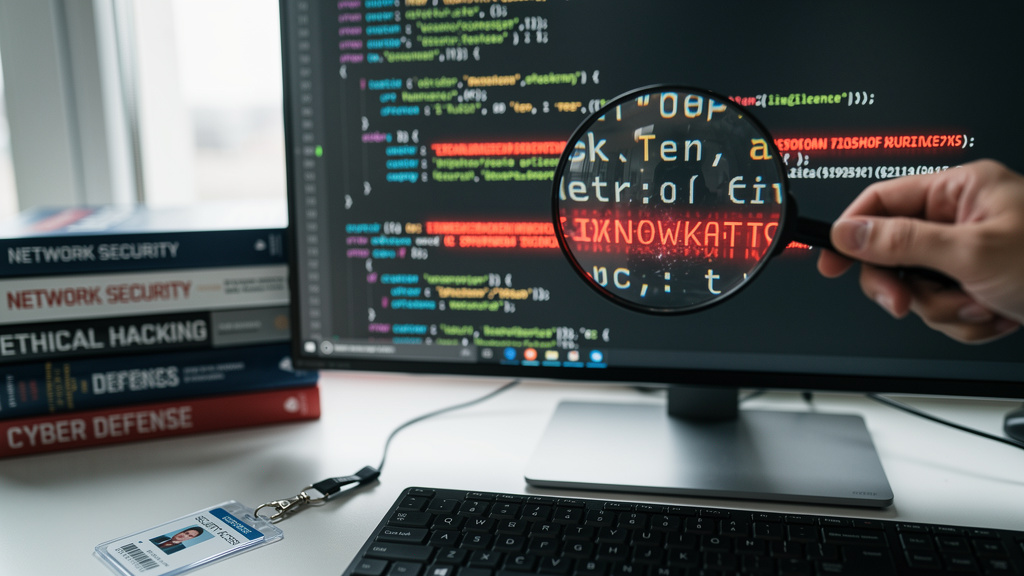
Security is where “good enough” code becomes dangerous. A small bug in AI-generated code is annoying. A small security weakness can turn into a breach, fines, and public headlines that scare customers away.
Most large AI models learn from public code, which includes plenty of bad habits and outdated patterns. When you ask for a login form, an API client, or a file upload handler, the model often copies patterns it has seen many times online. Some of those patterns are safe. Many are not. The model does not know the difference in a deep way. It only knows what looks common.
Common issues slip in quietly. For example, generated code may:
- Skip input validation, leaving you open to SQL injection or cross-site scripting.
- Handle authentication in a weak way or trust client-side checks.
- Log sensitive data such as emails or tokens in plain text.
- Include hard-coded API keys or secrets that developers forget to remove.
AI tools focus on “make it work” as fast as possible. They do not think like attackers who probe every edge case and misconfiguration. Modern attackers study common AI patterns too, then search for apps that follow them. That makes copy‑paste code from prompts a tempting target.
“Security is a process, not a product.”
— Bruce Schneier
The risk is even higher when you work with regulated data in healthcare, banking, or e‑commerce. One insecure endpoint can break rules around medical privacy, card payments, or personal data protection. The cost goes beyond fixes. Legal fees, audits, and lost trust can outweigh any short‑term time savings from AI.
To manage this, treat AI-generated code as untrusted until it passes real security checks. Use static analysis, dependency scanning, and penetration testing on every important product. Make security reviews a standard step in pull requests, especially for authentication, payments, and data storage. AI can help write tests and even suggest safer patterns, but human security engineers must lead threat modeling and final approval.
Why AI Can't Replace Creative Problem-Solving

AI is very good at remixing what already exists. It pulls patterns from training data and combines them into something that looks new. Creative engineering often demands the opposite. You need to step away from common paths, challenge assumptions, and design something no one has published yet.
Every model has a training data ceiling. It can only draw from examples and ideas that have already been written down somewhere. When a team faces a problem with no clear precedent, such as a new kind of real-time feature, a novel device, or a fresh user behavior, pattern matching falls short. You need someone who can say “what if we tried a completely different angle” instead of “what do similar apps do”.
“Creativity is just connecting things.”
— Steve Jobs
Think about major shifts in software history, like the move to containers, serverless platforms, or new database models. Those did not appear because a model stitched together patterns. They came from people who mixed theory, experience, and bold guessing. AI can now describe those patterns very well, but it did not invent them.
The same holds for user experience. AI can suggest “standard” flows for sign-ups, dashboards, or checkout forms. That keeps you from making obvious mistakes, but it also pulls you toward average. If every team in a market relies on the same models, their products start to look and feel the same. That makes it harder to stand out.
Human engineers bring context from many places. They remember painful outages, tricky clients, hardware limits, and behavior from past roles. They talk with sales, support, and marketing. That mix of inputs shapes ideas that do not show up in training data. They also excel at asking sharp questions that guide AI in better directions, instead of blindly accepting first drafts.
Teams that treat AI as a brainstorming helper, not a replacement for whiteboards and deep thinking, gain the most. Use AI to explore options quickly, write prototypes, and check edge cases. Then rely on human creativity to pick unusual paths, design fresh experiences, and define what “better” really means for your users and your business.
The Hidden Cost Of Eroding Developer Skills

AI can feel like a magic shortcut for developers. Type a prompt, get a function. Ask a question, get an answer. Over time, though, that shortcut can turn into a crutch that weakens the very skills your team depends on.
Programming follows a “use it or lose it” rule. When AI always writes database queries, junior developers stop learning how to craft them by hand. When AI always explains stack traces, even mid‑level engineers stop building their own mental models for debugging. The code still ships, but the people behind it grow less confident in their own reasoning.
This hits new developers the hardest. Early in a career, you learn by wrestling with loops, data structures, and algorithms. You struggle, make mistakes, and then the idea sticks. If AI jumps in for every hard step, that learning never fully happens. You get prompt engineers who can describe what they want, but not real engineers who understand why the code behaves the way it does.
Organizations pay for this when something goes wrong. During a major incident, you cannot wait for AI answers about production logs or broken pipelines. You need people who can trace issues through many layers, make judgment calls, and act under pressure. If your team has lost those muscles, outages last longer and root causes stay shallow.
There are also career limits. Senior roles require deep understanding of architecture, trade‑offs, and long-term risk. AI can support that work, but it does not replace the years of practice needed to see patterns and smell trouble early. Developers who skipped that practice by leaning on AI may find themselves stuck when they reach leadership positions.
“I’m not a great programmer; I’m just a good programmer with great habits.”
— Kent Beck
You can avoid this by setting clear habits that keep engineering skills growing:
- Run regular coding exercises where AI help is not allowed, so people stretch their own skills.
- Use code reviews as teaching moments, asking engineers to explain their choices instead of pasting prompt history.
- Pair junior and senior developers so AI support becomes one voice in the room, not the only one.
In the long run, that mix keeps your team fast, sharp, and ready for problems no model has seen before.
Conclusion
AI has earned its place in software engineering. It speeds up boilerplate work, drafts tests, suggests refactors, and helps explain unfamiliar frameworks. Used well, it gives teams more time to focus on the hard, interesting parts of building software.
The danger appears when AI moves from helper to pilot. Over-reliance invites fragile architectures, hidden security gaps, bland copy‑paste products, and weaker engineering skills. The code might run, but the system behind it becomes harder to scale, secure, and improve.
A stronger path is a hybrid model. Let AI handle repetitive coding, documentation, and quick research. Keep human experts in charge of architecture, security, creative design, and final reviews. Back this up with clear guardrails such as mandatory code reviews, security checks, and ongoing training that grows real engineering depth.
Teams that work this way gain a real edge. They ship faster without giving up quality, safety, or originality. The same mindset powers tools like Contentpen, where AI handles heavy lifting for SEO content while humans keep strategy, voice, and judgment. Software engineering benefits from the same balance.
The future belongs to engineers and leaders who treat AI as a powerful tool on the desk, not a replacement for their craft. Keep people at the center, let AI amplify their work, and both your code and your products will be stronger for it.
